German Learning Platform
A minimalist digital platform for language learning, designed to make vocabulary practice elegant, adaptive, and data-driven.
Overview
This website is an interactive language-learning tool created to experiment with UX design, data persistence, and adaptive learning logic.
Initially conceived as a personal project to accelerate German vocabulary learning during university, it evolved into a functional web application with a modern interface, speech synthesis integration, and intelligent tracking of learner performance.
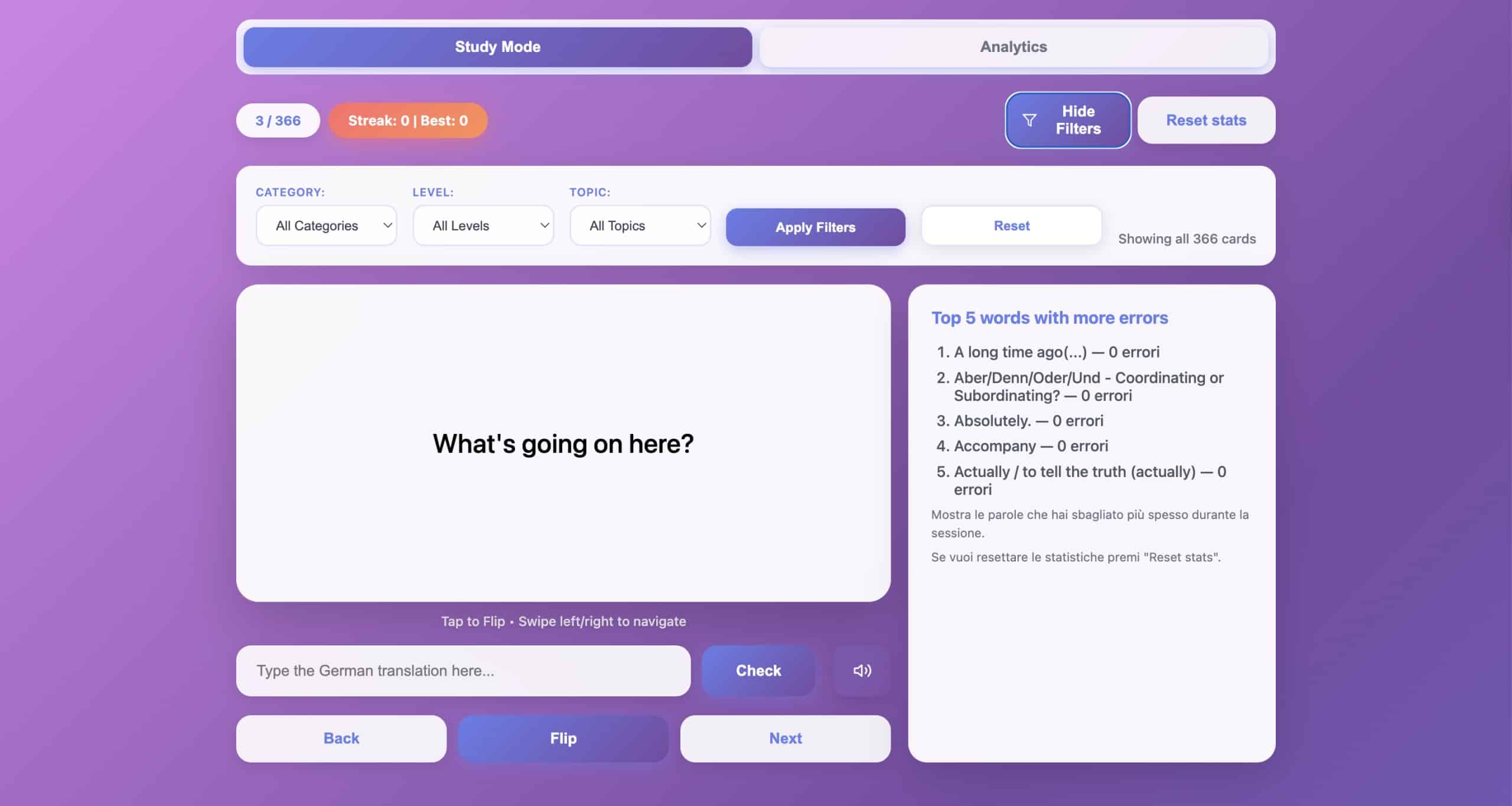
The platform allows users to:
-
Study with bilingual flashcards (German–English).
-
Track progress automatically through local storage.
-
Receive pronunciation support via built-in speech synthesis (TTS).
-
Get visual feedback on correct or wrong answers.
-
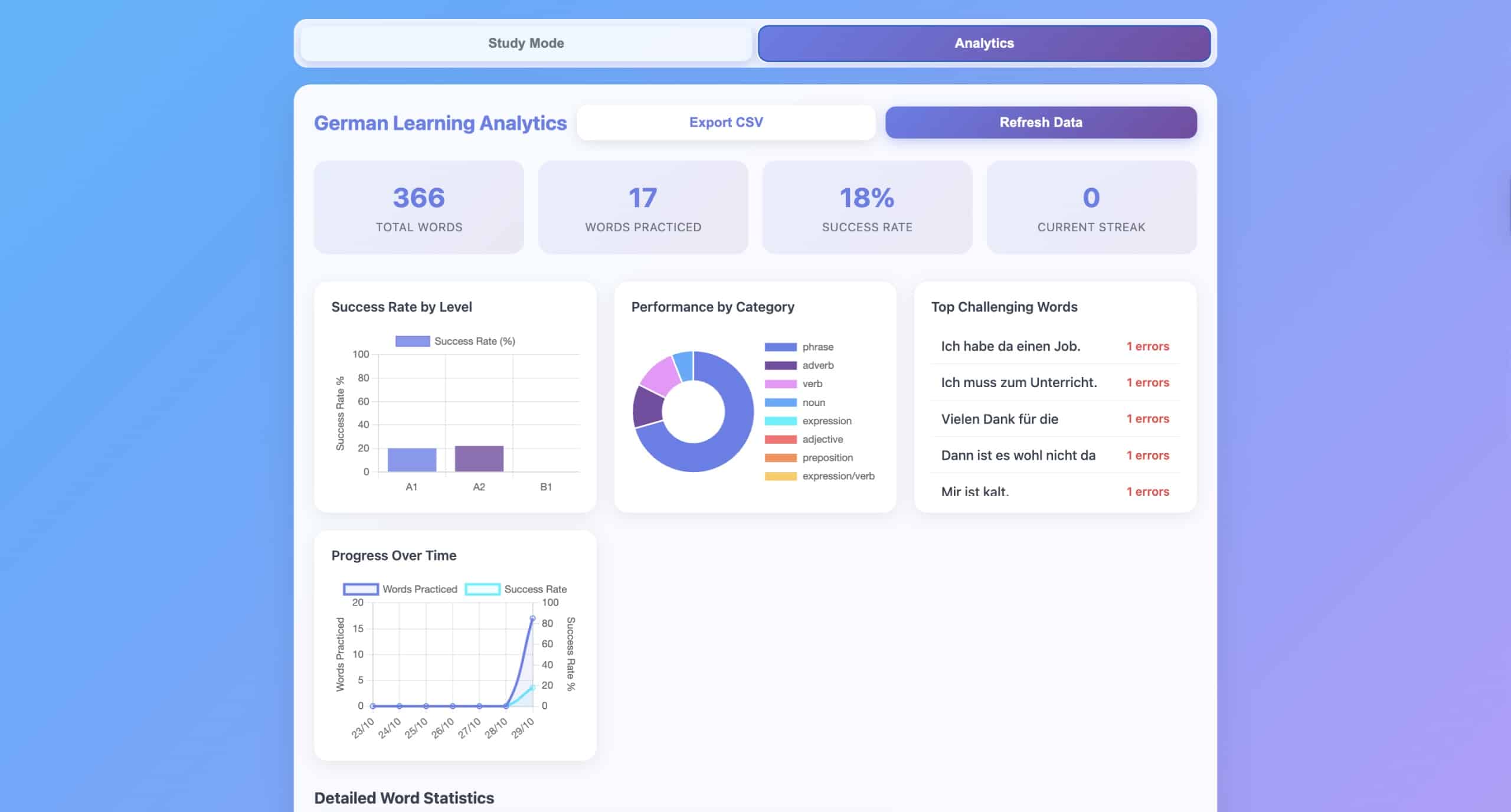
Export learning statistics for analysis.
While it started as a personal experiment, the project demonstrates how small, self-contained web apps can deliver personalized learning experiences — combining educational design, interaction logic, and data awareness.
Role: Creator & Developer
Year: 2025
Tech Stack: HTML / CSS / JavaScript (ES6), SpeechSynthesis API, LocalStorage API
The challenge
Corporate mental health solutions are often fragmented: employees struggle to find trusted professionals, and companies lack visibility into well-being trends. Existing offerings are either too clinical, too generic, or B2C oriented, failing to integrate with business goals.
Our challenge was to design a privacy-safe, scalable system that balances employee confidentiality with company-wide insights. Through interviews with HR managers and internal surveys, we discovered that companies see mental wellness as both an ethical duty and a business opportunity: happier employees lead to better retention, innovation, and performance.
Steps
Content & Learning Logic
Curated over 300 everyday German expressions and verbs organized by usage frequency. Built a “Mastery Mode” that re-introduces wrongly answered words more often, simulating the logic of spaced repetition.
Voice Integration
Added text-to-speech using the native browser Speech Synthesis API so learners can instantly hear correct pronunciation.
Hosting & Deployment
Packaged the entire application in a Docker container for CasaOS hosting, making it accessible on any personal server.
Next Step — AI Integration (Upcoming)
Currently working on an adaptive model that will analyze user behavior and dynamically adjust flashcard frequency and difficulty.
results
The platform delivers a distraction-free learning experience.
The combination of visual clarity, responsive animations, and progress analytics has significantly improved engagement during study sessions.
features
-
Filter System: Practice words by Category, Level, and Topic for targeted learning.
-
Learning Dashboard: Track total words, success rate, and streaks in real time.
-
Visual Stats: Charts display progress by level and top challenging words.
-
Self-Hosted Privacy: Runs locally via CasaOS / Nginx with no external data sharing.
-
Ongoing Development: A new adaptive model is being implemented to personalize difficulty and repetition.